
Cellulose Insulation in North Hollywood, CA
Energy-Saving Cellulose Insulation for North Hollywood, CA Homes — Licensed & Insured
Need cellulose insulation in North Hollywood, CA? NoHo Insulation Pros offers expert blow-in & dense-pack cellulose installation. Call (818) 477-1218 for a free quote.
- Licensed & Insured
- Locally Owned & Operated
- Free Inspection & Estimate
Request Your
Free EstimateCellulose insulation is a plant-based, recycled-material thermal and acoustic barrier installed within walls, attics, and floors to reduce heat transfer, lower energy bills, and improve indoor comfort. Made primarily from post-consumer recycled newspaper and cardboard treated with fire-retardant borate compounds, cellulose delivers outstanding R-values while keeping installation waste to a minimum.
North Hollywood’s unique mix of mid-century bungalows, 1960s apartment complexes, and newer mixed-use developments creates a wide range of insulation challenges. The neighborhood’s inland position within the San Fernando Valley means residents face some of Los Angeles County’s most extreme summer heat spikes and cool winter nights — conditions that standard fiberglass batts frequently fail to handle adequately.
At NoHo Insulation Pros, we specialize exclusively in insulation services for North Hollywood homeowners, landlords, and commercial property managers. Our crew understands local building codes, Valley microclimates, and the structural quirks common to NoHo’s housing stock. Call us today at (818) 477-1218 to schedule a free assessment.
Understanding Cellulose Insulation
Cellulose insulation has a longer track record than most homeowners realize. The material was first commercially manufactured in the United States during the 1920s, but it gained widespread adoption during the energy crisis of the 1970s when federal programs encouraged homeowners to retrofit older homes with high-density insulation. Because the San Fernando Valley saw rapid postwar housing construction between 1945 and 1975, a significant portion of North Hollywood’s single-family homes were built precisely during the era when cellulose retrofits became standard practice — meaning many local properties already have some cellulose in their walls, though that material is now decades old and likely degraded.
Modern cellulose insulation is composed of 75–85% recycled paper fiber and treated with non-toxic borate compounds that resist fire, mold, and pest intrusion. It is installed in two primary forms: loose-fill (blown-in) cellulose and dense-pack cellulose. Loose-fill is gravity-fed into open attic cavities, while dense-pack is pneumatically compressed into enclosed wall cavities at densities of 3.0–3.5 pounds per cubic foot, virtually eliminating settled voids over time.
The thermal performance of cellulose ranges from R-3.2 to R-3.8 per inch, which is meaningfully higher than standard fiberglass batts (R-2.2 to R-2.7 per inch). In a North Hollywood attic where California’s Title 24 energy code requires a minimum of R-38 for existing homes and R-49 for new construction, achieving the required depth with cellulose demands roughly 10–13 inches of settled material — a thickness that fits comfortably within the rafter depth of most Valley-era construction.
Beyond thermal performance, cellulose excels at air sealing when dense-packed, reducing infiltration that is a primary cause of energy loss in the drafty wood-frame structures common throughout NoHo. Its sound-dampening characteristics also make it particularly valuable along the Lankershim Boulevard and Cahuenga Pass corridors where traffic and commercial noise bleed into residential streets.
Cellulose is also the most environmentally sustainable major insulation product on the market, diverting newspaper and cardboard from California’s already-strained landfill system — an important consideration in a state with aggressive recycling mandates. For North Hollywood property owners pursuing LEED certification or LA’s Green Building Code compliance, cellulose frequently earns material credit points that fiberglass and spray foam cannot match.
Why Cellulose Insulation Is Needed in North Hollywood, CA
North Hollywood occupies a low-elevation inland basin within the San Fernando Valley, bounded roughly by the Santa Monica Mountains to the south and the Verdugo Hills to the northeast. This geography creates a pronounced “heat island” effect: summer temperatures in NoHo regularly exceed those recorded at LAX by 8–12°F, with the National Weather Service recording North Hollywood station highs above 105°F during the September 2022 heat dome that killed dozens across Los Angeles County. In that event, interior attic temperatures in uninsulated or under-insulated NoHo homes surpassed 145°F — temperatures that accelerate HVAC compressor wear and push electricity demand to dangerous grid-level peaks.
The Valley’s climate is classified as a semi-arid BSk/Csa transitional zone, producing large diurnal temperature swings. In January, overnight lows in North Hollywood frequently drop to 38–42°F while afternoon highs reach the low 60s. This 20–25°F daily swing stresses building envelopes that lack adequate insulation, causing expansion and contraction that gradually opens gaps in wall assemblies and attic bypasses — pathways through which conditioned air escapes year-round.
North Hollywood’s housing stock amplifies these climate challenges. The NoHo Arts District neighborhood, centered near the intersection of Lankershim Boulevard and Magnolia Avenue, is dense with 1940s and 1950s Spanish Colonial Revival and California Ranch homes that were originally constructed with little to no wall insulation and minimal attic insulation — often just 2–3 inches of degraded rock wool or fiberglass that delivers well below R-10 in actual performance. The Chandler Estates neighborhood to the east features mid-century duplexes and triplexes whose wall cavities were never insulated at all.
The 1994 Northridge Earthquake (magnitude 6.7, epicenter approximately 5 miles northwest of central North Hollywood) caused widespread structural micro-cracking in wood-frame and stucco construction throughout the area. Many of these micro-cracks were repaired cosmetically but not thoroughly sealed, creating air infiltration pathways that only dense-pack cellulose, with its ability to fill irregular voids, can adequately address.
Moisture management is another location-specific driver. Despite North Hollywood’s dry overall climate, the area receives the majority of its annual 14–15 inches of rainfall in concentrated winter storms between November and March. Inadequate roof and attic insulation contributes to condensation cycles during these wet periods, particularly in homes adjacent to the Tujunga Wash flood control channel where ground moisture levels are slightly elevated. Cellulose treated with borate compounds resists mold colonization far better than untreated fiberglass in these periodic high-humidity conditions.
Finally, California’s Title 24 energy code and the City of Los Angeles’s mandatory energy upgrade requirements triggered at point-of-sale and renovation permit thresholds mean that many North Hollywood property owners face legal obligations to upgrade insulation. Cellulose is one of the most cost-effective paths to compliance, particularly in the attic retrofits required under LA’s 2023 reach code amendments.
Signs You Need Cellulose Insulation in North Hollywood
Energy Bill Indicators
- Monthly SoCalGas and LADWP combined utility bills exceed $250 during summer cooling months in a home under 1,800 square feet
- HVAC system runs continuously for more than 30 minutes to maintain set temperature on days above 90°F
- Noticeable spike in electricity usage compared to neighbors with similar square footage
Comfort and Air Quality Symptoms
- Rooms on the top floor or beneath the roofline feel significantly hotter than lower-level rooms during summer afternoons
- Drafts detectable near electrical outlets on exterior walls, a classic sign of empty wall cavities
- Musty or stale odor in attic spaces, indicating moisture accumulation in degraded insulation
- Excessive dust circulation that clogs HVAC filters faster than the manufacturer’s recommended interval
Visual and Structural Indicators
- Attic insulation depth below 10 inches (use a ruler during a flashlight inspection)
- Visible bare joists in any section of the attic floor
- Insulation that has turned gray, clumped, or flattened — signs of moisture damage or age-related settling
- Post-renovation attic access that exposes previously sealed insulation zones to the open attic environment
Urgency Indicators
If your home was built before 1978, if you have not had an insulation inspection since the 1994 Northridge Earthquake, or if your HVAC system is being replaced, treat insulation assessment as an immediate priority — not an optional upgrade.
Our Cellulose Insulation Installation Process in North Hollywood
Free On-Site Assessment (1–2 Hours)
A NoHo Insulation Pros technician visits your property to measure existing insulation depth and R-value, identify air bypasses, assess moisture conditions, and evaluate attic ventilation ratios per California Building Code Section R806. We document findings with photographs and thermal imaging where applicable.
Insulation Removal (If Required) (Half Day to Full Day)
If existing insulation is contaminated, rodent-damaged, or below R-19, we perform complete removal using HEPA-filtered vacuum equipment to prevent cellulose dust and rodent particulate from entering living spaces. Removed material is bagged and hauled to a licensed LA County waste facility. Learn more about our insulation removal service
Air Sealing and Prep (2–4 Hours)
Before any cellulose is blown, we seal all attic bypasses — top plates, recessed light fixtures, plumbing and electrical penetrations — using two-component spray foam or fire-rated caulk. This step is particularly critical in North Hollywood’s pre-1980 construction where these penetrations were rarely addressed at time of build.
Ventilation Baffle Installation (1–2 Hours)
Cardboard or rigid foam ventilation baffles are installed at every eave rafter bay to maintain the 1-inch minimum clear ventilation channel required by California code and to prevent cellulose from blocking soffit vents — a common installation error we frequently correct in NoHo properties.
Cellulose Blowing (2–6 Hours Depending on Square Footage)
Cellulose is loaded into a truck-mounted or portable blowing machine and fed through a 3-inch flexible hose into the attic cavity. Technicians work methodically from the far end toward the access hatch, achieving a settled depth calibrated to deliver the target R-value (typically R-38 to R-60 depending on code requirement and client goals).
Dense-Pack Wall Installation (If Applicable) (4–8 Hours)
For wall cavity retrofits common in the Chandler Estates and Toluca Lake-adjacent neighborhoods, we drill 2-inch fill holes between studs, insert a fill tube, and dense-pack cellulose at 3.0–3.5 lbs/ft³ before patching and finishing.
Final Inspection and Documentation (30–60 Minutes)
We measure final settled depth at multiple points, photograph completed work, and provide you with a written report including R-value achieved — documentation valuable for LADWP rebate applications and future property sales.
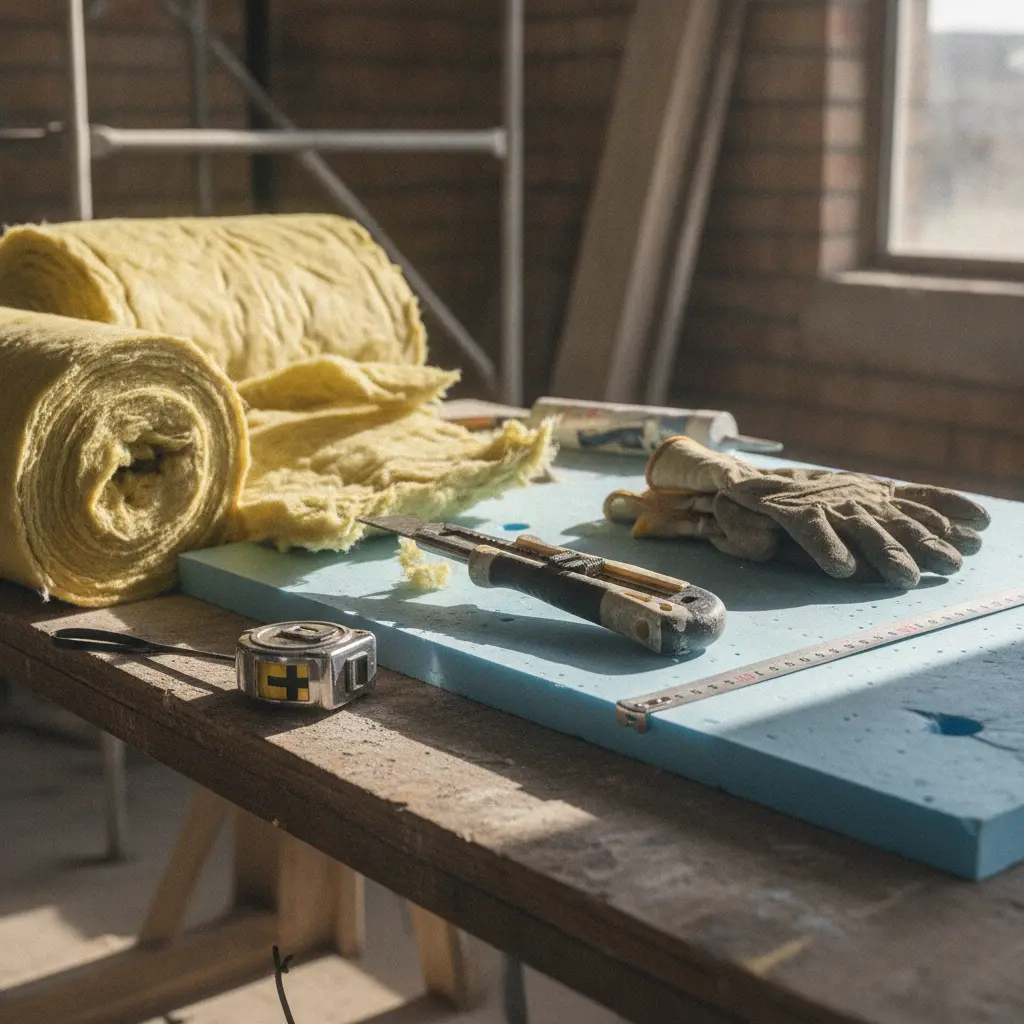
Our team in action — insulation professionals serving North Hollywood
Cellulose Insulation Methods and Approaches
Loose-Fill Attic Blowing
The most common application in North Hollywood, loose-fill cellulose is pneumatically distributed across open attic floors to achieve uniform coverage. Ideal for flat or low-slope attic configurations typical of Ranch and post-WWII bungalow construction. Achieves R-3.7 per inch when freshly installed with approximately 20% settling factored into depth calculations.
Dense-Pack Wall Retrofit
Applied to enclosed wall cavities through drilled access holes, dense-pack cellulose is compressed at high density to eliminate settling and create a partial air barrier. This method is the preferred solution for the 1940s–1960s stucco homes throughout the NoHo Arts District where original wall cavities were left empty. Explore our blow-in insulation services
Stabilized Spray-Applied Cellulose
Cellulose mixed with a small amount of water activates the natural starches in the paper fiber, allowing it to be spray-applied to open roof deck cavities in new construction or open-rafter additions. Useful in North Hollywood’s growing ADU (Accessory Dwelling Unit) construction market, where tight framing schedules benefit from fast-setting spray application.
Hybrid Cellulose and Spray Foam Systems
For maximum performance in high-end NoHo renovations, we combine a 2-inch closed-cell spray foam layer at the roof deck (creating a vapor retarder) with blown cellulose over the attic floor below, achieving R-values above R-60 while managing the Valley’s occasional winter condensation risk. Learn about our spray foam insulation options
Crawl Space Cellulose Applications
Some older North Hollywood homes with raised foundations benefit from cellulose installed between floor joists in the crawl space, combined with a ground vapor barrier. See our crawl space insulation services
Ready for Cellulose Insulation? Get Your Free Estimate Today.
NoHo Insulation Pros serves North Hollywood and the surrounding area — we’ll be on-site within 24 hours.
📞 Call (818) 477-1218Cellulose Insulation Cost in North Hollywood, CA
Understanding typical price ranges helps North Hollywood property owners budget accurately and evaluate competitive bids. All figures below reflect current Los Angeles County labor and material rates.
Attic Loose-Fill Cellulose
- Standard homes (1,000–1,500 sq ft attic floor): $1,200–$2,400 installed
- Larger homes (1,500–2,500 sq ft attic floor): $2,400–$4,000 installed
- Per square foot range: $1.10–$1.80/sq ft for attic blow-in to R-38
Dense-Pack Wall Insulation
- Per square foot of wall cavity: $2.50–$4.50 including drilling, filling, and patch
- Typical whole-house wall retrofit (1,200 sq ft home): $4,500–$8,000
Insulation Removal Add-On
- Attic removal before new install: $1.00–$1.50/sq ft additional
North Hollywood-Specific Cost Factors
LA County prevailing wage requirements on projects over certain contract thresholds, LADWP rebate program eligibility (currently offering up to $0.10/sq ft for qualifying attic insulation upgrades), and permit fees for projects triggering City of Los Angeles mechanical permit review can all affect final project cost. Homes in the NoHo Historic Preservation Overlay Zone may face additional exterior wall constraints that increase labor time.
Call (818) 477-1218 for a precise, no-obligation quote tailored to your property’s specific conditions.
Cellulose Insulation Services Across North Hollywood Neighborhoods
NoHo Arts District
The walkable core centered on Lankershim and Magnolia features a dense concentration of 1940s–1950s Spanish Revival and Craftsman bungalows. Most were built without wall insulation. Traffic noise from the Metro B Line station and Lankershim make acoustic cellulose a dual-purpose upgrade here.
Chandler Estates
This eastern NoHo neighborhood is characterized by 1960s duplexes and small apartment buildings with shallow attic cavities and uninsulated concrete block walls — a configuration requiring hybrid dense-pack and board insulation solutions rather than standard blow-in.
Toluca Lake (North Hollywood Portion)
The northwest fringe of Toluca Lake that falls within North Hollywood zip codes contains larger 1950s–1970s ranch homes with sprawling attic footprints often exceeding 2,000 sq ft — projects that require multiple blowing machine loads and precise depth monitoring to achieve uniform R-values.
Lankershim Corridor
Mixed-use residential buildings along the Lankershim transit corridor, many constructed post-2010, may have original insulation that already meets code but falls short of current Title 24 reach code targets, making cellulose top-ups a cost-effective performance upgrade.
Cellulose Insulation Maintenance Tips for North Hollywood Homeowners
- Inspect attic depth annually: Use a ruler to verify settled cellulose depth has not dropped below your target R-value threshold, especially after any roofing work that may have disturbed the material.
- Check for rodent intrusion after summer: North Hollywood’s warm climate supports active roof rat populations. Inspect attic access points each October for tunneling or nesting that displaces cellulose.
- Ensure soffit vents remain unobstructed: Verify that cellulose has not migrated to block eave ventilation baffles, which can cause attic moisture buildup during winter rain events.
- Re-seal attic penetrations after HVAC servicing: HVAC technicians frequently disturb air sealing around ductwork. After any service visit, check penetration seals visually.
- Monitor for moisture staining: Any brown or gray water staining on cellulose indicates a roof or flashing leak that must be repaired before the insulation absorbs further moisture.
- Keep attic access hatch weatherstripped: Poorly sealed attic hatches — common in North Hollywood’s older pull-down stair designs — are significant heat and cool-air loss points.
- Reapply cellulose after major renovations: Any interior remodel opening exterior walls or attic sections should be followed by a re-inspection and spot top-up.
Why Choose NoHo Insulation Pros for Cellulose Insulation in North Hollywood
NoHo Insulation Pros is a locally focused insulation company serving North Hollywood and the immediate San Fernando Valley. Our technicians work exclusively in this region, meaning they understand the specific demands of Valley-basin climate, the housing stock of neighborhoods like the NoHo Arts District and Chandler Estates, and the administrative requirements of LA City building permits and LADWP rebate programs.
We offer the full spectrum of insulation services North Hollywood properties require — from initial insulation removal through attic insulation installation, blow-in insulation for wall retrofits, crawl space encapsulation, and spray foam insulation for specialty applications — all under one roof with consistent quality standards.
We provide detailed post-installation documentation to support LADWP rebate claims and Title 24 compliance verification. Our pricing is transparent with no hidden material surcharges, and every project is quoted in writing before work begins.
Call (818) 477-1218 to speak with a North Hollywood insulation specialist today.
Frequently Asked Questions: Cellulose Insulation in North Hollywood, CA
How much does cellulose insulation cost in North Hollywood?
Attic loose-fill cellulose in North Hollywood typically runs $1.10–$1.80 per square foot installed, or roughly $1,200–$4,000 for most single-family homes depending on attic size and existing insulation conditions. Dense-pack wall retrofits cost more — typically $2.50–$4.50 per square foot of wall cavity. LADWP rebates and LA Department of Building and Safety permit structures can affect final net cost. Contact us at (818) 477-1218 for a property-specific quote.
How long does cellulose insulation installation take in a typical North Hollywood home?
An attic loose-fill project for a 1,200–1,500 square foot North Hollywood bungalow is typically completed in a single day, including air sealing prep. Dense-pack wall retrofits for a full house add one to two additional days. Projects requiring prior insulation removal add approximately half a day per 1,000 square feet of attic.
Is cellulose insulation safe for older North Hollywood homes that may have asbestos?
Homes built before 1980 — which includes most of the Arts District, Chandler Estates, and Toluca Lake-adjacent properties — may contain asbestos in duct insulation, floor tiles, or roofing materials. We do not disturb or remove asbestos-containing materials. If asbestos is suspected in areas adjacent to the insulation work zone, we require a licensed California asbestos consultant clearance before proceeding. Learn about our safe insulation removal protocols
Will cellulose insulation help with noise from the Metro B Line and Lankershim Boulevard traffic?
Yes. Dense-pack cellulose has a Sound Transmission Class (STC) rating significantly higher than open-wall cavities and modestly higher than standard fiberglass batts. For properties within 500 feet of Lankershim Boulevard or the Metro station, cellulose in both attic and wall cavities will produce a noticeable reduction in ambient traffic and train noise penetration.
Does North Hollywood require a permit for cellulose insulation installation?
The City of Los Angeles generally does not require a separate building permit for like-for-like attic insulation replacement or top-up projects. However, if the project involves electrical work, HVAC duct relocation, or wall opening that triggers a mechanical or structural permit, insulation work may fall under that permit’s scope. We navigate this process for you and advise on permit requirements before any work begins.
How does cellulose insulation compare to spray foam for North Hollywood’s climate?
Closed-cell spray foam delivers a higher R-value per inch (R-6 to R-7) and creates a true vapor barrier — advantages in specific applications like unvented roof deck assemblies. However, cellulose delivers superior cost-per-R-value performance for vented attic applications, has far lower embodied carbon, and is eligible for more rebate programs. For most North Hollywood attic retrofits, cellulose is the recommended primary solution. Read our full comparison of spray foam and blown insulation
Can I qualify for LADWP or SoCalGas rebates on cellulose insulation?
Yes. LADWP’s residential energy efficiency rebate program currently offers incentives for qualifying attic insulation upgrades in single-family homes. SoCalGas also periodically offers rebates on insulation improvements tied to heating efficiency. Rebate amounts and eligibility thresholds change annually. We assist clients with rebate application documentation as part of every project.
How often does cellulose insulation need to be replaced in North Hollywood homes?
Properly installed cellulose in a dry, pest-free attic environment has a functional lifespan of 20–30 years or more. In North Hollywood, the primary accelerants of early replacement are rodent intrusion (which tunnels and contaminates the material), roof leaks that introduce sustained moisture, and age-related settling in older installations that drops R-values below code minimum thresholds. Annual visual inspections are the best way to catch problems early. Learn about our insulation replacement services
Get Your Free Cellulose Insulation Estimate in North Hollywood Today
Whether you’re dealing with sky-high LADWP bills during Valley heat waves, a drafty mid-century bungalow in the NoHo Arts District, or a rental property that needs to meet Title 24 compliance before your next tenant turnover, NoHo Insulation Pros has the local expertise and equipment to get it done right.
We serve all of North Hollywood and the surrounding San Fernando Valley with fast scheduling, transparent pricing, and thorough post-installation documentation.
Call us now at (818) 477-1218 to speak directly with a North Hollywood insulation specialist and schedule your free on-site assessment. Don’t let another Valley summer pass with an under-insulated home.