
Duct Insulation in North Hollywood, CA
Energy-Saving Duct Insulation for North Hollywood, CA Homes — Licensed & Insured
Need duct insulation in North Hollywood, CA? NoHo Insulation Pros delivers Title 24-compliant solutions for Valley homes. Call (818) 477-1218 for a free estimate.
- Licensed & Insured
- Locally Owned & Operated
- Free Inspection & Estimate
Request Your
Free EstimateDuct insulation is the process of wrapping, sealing, and thermally protecting the air distribution system in your home or commercial building so that conditioned air reaches every room at the temperature your thermostat demands. In a community like North Hollywood — where summer afternoons routinely push past 100°F in the San Fernando Valley heat dome and winter nights can dip into the low 40s — uninsulated or poorly insulated ducts bleed energy at an alarming rate, driving utility bills sky-high and leaving rooms stuffy, uneven, or dusty.
At NoHo Insulation Pros, we specialize in professional duct insulation for the unique building stock, climate conditions, and energy codes found right here in North Hollywood. From 1950s post-war bungalows in the Lankershim Arts District to modern multi-family complexes near the NoHo Arts District Metro station, our team delivers solutions built for this specific corner of Los Angeles County. Call us today at (818) 477-1218 to schedule your assessment.
Understanding Duct Insulation in North Hollywood, CA
Duct insulation refers to the thermal and sometimes acoustic barrier applied to the exterior surfaces of HVAC ductwork — the network of metal or flexible tubes that carries heated or cooled air from your furnace or air handler to living spaces throughout a structure. Without adequate insulation, conditioned air traveling through ducts loses energy to the surrounding environment before it ever reaches a room vent.
The concept of insulated ductwork became codified in American building practice during the energy crisis of the 1970s, when the federal government mandated efficiency improvements in new residential construction. California took it further with Title 24 energy standards, first adopted in 1978 and updated repeatedly since, which today require duct systems in new construction to achieve a minimum insulation value of R-6 in conditioned spaces and R-8 in unconditioned spaces such as attics and crawl spaces. Many North Hollywood homes built before 1978 — and that represents a substantial share of the housing stock in neighborhoods like Toluca Lake and Valley Village — were constructed with little to no duct insulation at all.
Ductwork in residential buildings typically falls into three categories: rigid sheet-metal ducts, flexible ducts (often called “flex duct”), and duct board made from fiberglass panels. Each type accepts different insulation approaches. Rigid metal ducts are commonly wrapped with fiberglass batts or encapsulated with spray foam. Flex ducts are manufactured with a built-in insulation layer, but that layer degrades over time and often needs augmentation in hot climates. Duct board has insulating properties inherent to its material but can deteriorate in high-humidity crawl spaces.
In North Hollywood specifically, the prevalence of older ranch-style homes with large, unconditioned attics makes attic ductwork a primary concern. Studies by the California Energy Commission have found that ducts running through unconditioned attic spaces can lose 25–40% of system output through conduction and air leakage alone — a staggering waste that residents on Magnolia Boulevard and Camarillo Street feel every August when their energy bills arrive.
Understanding the type of duct system in your building, where those ducts are routed, and what level of insulation currently exists is the essential first step. Learn more about our attic insulation services that often accompany duct insulation projects for maximum efficiency gains.
Why Duct Insulation Is Needed in North Hollywood, CA
Extreme San Fernando Valley Heat
North Hollywood sits in the eastern San Fernando Valley, a topographic bowl that traps heat radiated from surrounding mountains and dense urban surfaces. The National Weather Service station at Van Nuys Airport — just 2.1 miles northwest of central North Hollywood — recorded a historic high of 117°F on September 6, 2020, during the Labor Day heat wave that set California all-time temperature records. During a typical July, the average daily high in North Hollywood reaches 98°F, with attic air temperatures regularly exceeding 140–160°F. When your ductwork runs through an attic at those temperatures without proper insulation, the thermal differential between the 55°F air inside the duct and the 150°F air surrounding it is so extreme that energy loss is enormous — often translating to a 30–40% drop in cooling output before the air even reaches your living room.
Aging Housing Stock
A large portion of North Hollywood’s single-family homes were built between 1940 and 1970, during the post-World War II suburban expansion that filled neighborhoods like Toluca Lake, Valley Village, and the area around Lankershim Boulevard. These homes were built to standards that predated modern energy codes entirely. Original ductwork in these properties is often uninsulated galvanized steel, and where insulation does exist, it is frequently fiberglass wrap that has compressed, become moisture-saturated, or fallen away from joints over decades of thermal cycling.
Seismic Activity and Duct Disconnections
The Northridge Earthquake of January 17, 1994 — a 6.7-magnitude event centered approximately 7 miles northwest of North Hollywood — caused widespread structural damage throughout the San Fernando Valley. Less visibly, the seismic shaking dislodged flex duct connections, cracked duct board panels, and separated insulation wrap from rigid ductwork across thousands of local homes. Many of those repairs were never properly completed. If your North Hollywood home has not had its ductwork professionally inspected since 1994, there is a meaningful probability of unaddressed insulation damage from that event or subsequent smaller earthquakes.
Santa Ana Wind Conditions and Dust Infiltration
North Hollywood experiences regular Santa Ana wind events each fall and winter, when dry, hot winds sweep down from the northeast through passes in the San Gabriel and Santa Susana mountains. Wind speeds during major Santa Ana events frequently reach 50–70 mph, driving fine particulate dust through any gap or breach in duct systems. Poorly insulated and poorly sealed ducts act as collection points for this dust, which is then circulated throughout the home every time the HVAC system runs. Residents in the Chandler Estates and Magnolia Park areas report noticeably worse indoor air quality in October and November, a pattern directly linked to leaky, uninsulated ductwork.
Energy Code Compliance for Rentals and Sales
Los Angeles County now requires duct insulation upgrades to meet Title 24 standards as a condition of certain permits and property sales. Landlords operating rental properties along Burbank Boulevard or in the NoHo Arts District who trigger an HVAC replacement permit must bring ductwork into compliance — making proactive duct insulation a financially strategic decision, not just a comfort improvement.
Signs You Need Duct Insulation in North Hollywood
Comfort and Temperature Issues
- Rooms at the far end of the duct run — such as back bedrooms — are noticeably hotter in summer or colder in winter than rooms near the air handler
- Your thermostat reads the target temperature, but the living room or master bedroom never actually feels comfortable
- Certain rooms require the system to run continuously to maintain livable temperatures during a Valley heat wave
Energy and Billing Indicators
- Your summer DWP (Department of Water and Power) electric bill exceeds expectations for your square footage — in North Hollywood, a well-insulated 1,500 sq ft home should average $120–$180/month in July, not $300+
- Your HVAC system runs for unusually long cycles compared to similar homes on your block
- Energy usage has increased year-over-year without a change in occupancy or behavior
Physical and Visual Symptoms
- Visible condensation or moisture stains around duct connections in the attic or crawl space
- Insulation wrap that is visibly torn, fallen away, or compressed to less than 1 inch thickness
- Dusty or musty air blowing from supply registers immediately after the system starts — a sign of unfiltered infiltration through duct gaps
Urgency Indicators
- Your home was built before 1978 and has never had a duct insulation inspection
- You have recently replaced your HVAC unit but still experience poor performance — a new system cannot compensate for uninsulated ducts
Our Duct Insulation Process in North Hollywood
Initial Consultation and Home Assessment (Day 1 — 60–90 Minutes)
Our technician visits your North Hollywood property to conduct a visual and diagnostic review of your existing ductwork, HVAC system, and building layout. We document duct routing, current insulation R-values (if any), and identify problem areas. For homes in older neighborhoods like Valley Village or near Tujunga Avenue, we pay particular attention to attic conditions, noting any earthquake-related disconnections or rodent damage common in the area.
Duct Leakage Testing (Day 1 or Day 2 — 1–2 Hours)
Before insulating, we perform a blower door or duct pressurization test to quantify air leakage. This step is critical because insulating leaky ducts without sealing them first locks in the inefficiency. We measure leakage in CFM25 (cubic feet per minute at 25 Pascals of pressure), and compare results against California Title 24 benchmarks.
Duct Sealing and Air Sealing (Day 2 — 2–4 Hours)
All identified leaks, gaps, and disconnected joints are sealed using mastic sealant or UL-181-compliant foil tape before insulation is applied. This step frequently adds measurable immediate efficiency gains on its own. Our spray foam insulation services may be used for hard-to-reach connection points in tight attic configurations common in 1960s North Hollywood builds.
Material Selection and Preparation (Day 2 — 30–60 Minutes)
Based on duct type, location, and the project scope, we select appropriate insulation material — fiberglass wrap, rigid foam board, or spray foam — ensuring the chosen product meets or exceeds the R-8 minimum required for North Hollywood’s Climate Zone 9 under Title 24.
Insulation Installation (Day 2–3 — 4–8 Hours Depending on System Size)
Our crew installs insulation systematically from the air handler outward, ensuring complete coverage with no thermal bridging at supports or hangers. All work in attic spaces is performed with appropriate heat precautions given North Hollywood’s extreme attic temperatures.
Post-Installation Verification (Day 3 — 1 Hour)
We conduct a second duct leakage test to confirm that sealing and insulation work meets Title 24 compliance thresholds and document final R-values installed at each duct segment.
Final Walkthrough and Documentation (Day 3 — 30 Minutes)
We review all completed work with the homeowner, provide documentation suitable for permit records or utility rebate applications through the LADWP energy efficiency programs, and answer any follow-up questions about maintenance.
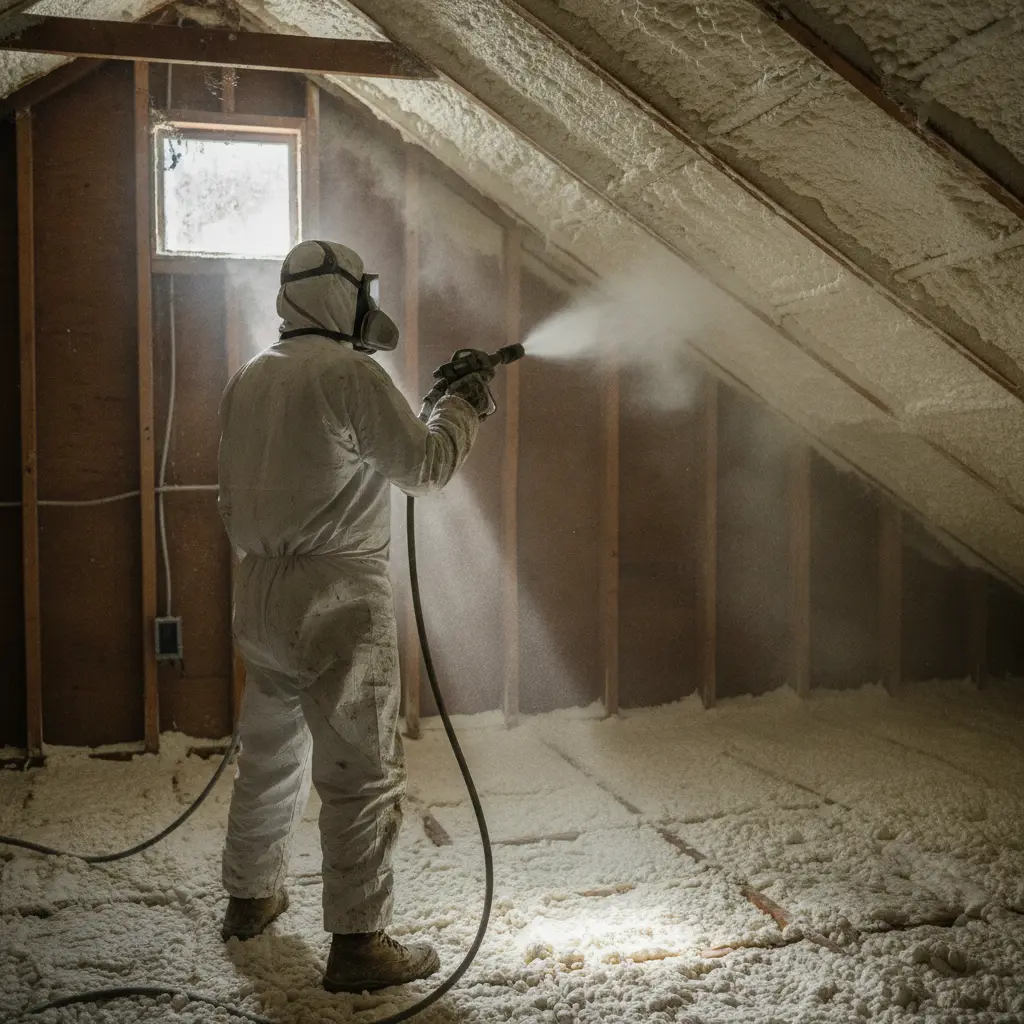
Our team in action — insulation professionals serving North Hollywood
Duct Insulation Methods and Approaches
Fiberglass Batt Wrap Insulation
The most common approach for rigid sheet-metal ductwork, fiberglass batt insulation is wrapped around ducts and secured with foil-faced tape or wire ties. Batts are available in R-6, R-8, and R-11 configurations. This method is cost-effective and well-suited for accessible attic ductwork in the ranch-style homes prevalent in Toluca Lake and Chandler Estates. Its primary limitation is that it requires clean, dry duct surfaces to adhere properly and can absorb moisture in damp crawl spaces.
Spray Foam Encapsulation
Closed-cell spray polyurethane foam is applied directly to duct surfaces, simultaneously insulating and air-sealing in a single step. This method achieves the highest R-value per inch (approximately R-6.5 per inch for closed-cell) and creates a vapor barrier ideal for North Hollywood’s mild but variable humidity conditions. Explore our spray foam insulation options for full system encapsulation projects. Best used in hard-to-access runs and in areas prone to condensation.
Rigid Foam Board Insulation
Polyisocyanurate or extruded polystyrene panels cut and fitted around ductwork provide excellent R-values (R-6 to R-8 per inch) and resist moisture. This method is particularly effective in crawl spaces common in elevated North Hollywood bungalows, where flex duct and rigid metal runs benefit from durable protection against the seasonal moisture fluctuations in the San Fernando Valley floor.
Pre-Insulated Flex Duct Replacement
When existing flexible ductwork has degraded insulation or is over 15–20 years old, replacement with new R-8 pre-insulated flex duct is often more cost-effective than attempting to augment failing original material. See our insulation replacement services for full system duct replacement projects across North Hollywood properties.
Blow-In Insulation Over Ducts
In attic spaces where ductwork is buried or runs close to the attic floor, blow-in insulation can be applied over ducts as part of a comprehensive attic air-sealing project, increasing effective R-values by embedding ducts within the insulation envelope rather than leaving them exposed to extreme attic air temperatures.
Ready for Duct Insulation? Get Your Free Estimate Today.
NoHo Insulation Pros serves North Hollywood and the surrounding area — we’ll be on-site within 24 hours.
📞 Call (818) 477-1218Duct Insulation Cost in North Hollywood, CA
Understanding duct insulation costs in North Hollywood helps homeowners and property managers budget accurately and evaluate quotes from contractors. Pricing in the Los Angeles metro area reflects local labor rates, California-specific material costs, and the complexity of working in older, sometimes challenging building configurations.
Typical Cost Ranges
- Small single-family home (under 1,200 sq ft, basic attic duct wrap): $800–$1,500
- Mid-size home (1,200–2,200 sq ft, full attic and crawl space duct insulation): $1,500–$3,500
- Large home or duplex (2,200+ sq ft, complex duct systems or spray foam): $3,500–$7,000+
- Duct sealing alone (without insulation): $400–$900 depending on duct length and access
- Combined duct insulation and attic insulation package: $2,500–$6,000 for most North Hollywood homes
Factors That Affect Your North Hollywood Quote
- Attic access and conditions: Low-pitch rooflines common in Valley Village mid-century homes require more labor time
- Duct system age and condition: Heavily degraded or earthquake-damaged ductwork may require sealing or partial replacement before insulation
- Linear footage of ductwork: Larger homes with extended duct runs cost proportionally more
- Insulation method selected: Spray foam is 20–35% more expensive per linear foot than fiberglass wrap but provides superior performance
- Permit requirements: LA County permits add $150–$400 to project costs but are required for insulation work tied to HVAC replacements
Available Incentives
LADWP offers rebates of up to $200 for qualifying duct sealing and insulation upgrades through its Residential Energy Efficiency Programs. The federal Inflation Reduction Act provides a tax credit of up to 30% of project costs for qualifying energy efficiency improvements, which can significantly reduce out-of-pocket expenses for North Hollywood homeowners.
Neighborhoods We Serve in North Hollywood
NoHo Arts District
The walkable core around Lankershim Boulevard and the Metro Red Line station features a mix of early 1960s apartment buildings and newer mixed-use developments. Older apartment buildings in this area frequently have centralized duct systems with decades of deferred maintenance, while new construction must meet strict Title 24 standards. We handle both scenarios.
Valley Village
Bordered by Burbank to the north and Magnolia Boulevard to the south, Valley Village is home to a dense concentration of post-war single-family homes built between 1945 and 1960. These properties overwhelmingly use attic-mounted forced-air systems with original, minimally insulated sheet-metal ductwork — our most common duct insulation scenario in North Hollywood.
Toluca Lake
This upscale neighborhood near the Warner Bros. lot features larger mid-century homes, many of which have been renovated without addressing original ductwork. High home values here make professional duct insulation a worthwhile investment, and we frequently pair duct projects with comprehensive attic insulation upgrades for maximum ROI.
Chandler Estates and Magnolia Park
These quiet residential blocks along Chandler Boulevard and east toward Burbank feature 1950s bungalows with crawl spaces — a configuration requiring attention to both attic and below-floor duct runs. Crawl space insulation is frequently combined with duct wrap work in this area.
Duct Insulation Maintenance Tips for North Hollywood Homeowners
- Inspect attic ductwork annually in October — before Santa Ana wind season begins, visually check for displaced insulation wrap, separated joints, or signs of rodent intrusion common in the San Fernando Valley.
- Replace HVAC air filters every 30–60 days during summer months when the system runs continuously — clogged filters increase system pressure and can stress duct connections.
- Check supply and return registers for dust buildup after Santa Ana wind events, which signals potential duct leakage allowing unfiltered air infiltration.
- Monitor your DWP bill month-over-month — a sudden increase in July or August without a behavior change is a common first signal of insulation degradation.
- Keep attic ventilation clear — North Hollywood’s extreme attic temperatures are partially mitigated by proper soffit and ridge vent airflow; blocked vents accelerate insulation degradation.
- After any seismic event exceeding magnitude 4.0, have duct connections inspected — the San Fernando Valley experiences regular minor seismicity that can dislodge flex duct collars over time.
- Schedule a professional duct inspection every 5–7 years, or immediately when replacing an HVAC unit, to ensure ductwork remains compliant with current Title 24 requirements.
Why Choose NoHo Insulation Pros for Duct Insulation in North Hollywood
NoHo Insulation Pros is a locally focused insulation contractor serving North Hollywood and the surrounding San Fernando Valley communities. Unlike large regional contractors who treat every California home the same, our team understands the specific challenges of Climate Zone 9, the quirks of valley mid-century construction, and the requirements of LADWP rebate documentation and LA County permitting.
We offer a full range of insulation services — including insulation removal, crawl space encapsulation, and blow-in insulation — so that your duct insulation project can be part of a comprehensive energy efficiency upgrade rather than an isolated repair. Our technicians are trained in duct pressurization testing and Title 24 compliance documentation, ensuring your project meets the standards required for utility rebates and permit sign-offs.
We provide detailed written estimates with no hidden fees, honest assessments about what your system actually needs, and responsive service to the North Hollywood community we call home. Call (818) 477-1218 to speak with a local expert today.
Frequently Asked Questions About Duct Insulation in North Hollywood, CA
How much does duct insulation cost in North Hollywood?
Most North Hollywood homeowners pay between $1,500 and $3,500 for a complete duct insulation project on a typical single-family home. Smaller homes or projects limited to accessible attic sections can be completed for $800–$1,500, while large homes or projects requiring spray foam encapsulation may reach $5,000–$7,000. We provide free, detailed written estimates after inspecting your specific system.
How long does duct insulation take to complete?
The majority of North Hollywood residential duct insulation projects are completed in 1–2 days. Day one typically covers assessment and duct sealing; day two covers insulation installation and post-installation testing. Larger or more complex systems — such as those in multi-family buildings near Lankershim Boulevard — may require 3 days.
Will duct insulation actually lower my DWP bill?
Yes, in most cases measurably so. California Energy Commission research indicates that properly insulated and sealed duct systems reduce HVAC energy consumption by 20–30% in Climate Zone 9. For a North Hollywood home spending $250/month on summer cooling, that represents $50–$75 in monthly savings — enough to recoup a typical project cost within 2–4 years.
Do I need a permit for duct insulation in North Hollywood?
Standalone duct insulation work generally does not require a permit in LA County. However, if duct insulation is performed as part of an HVAC replacement or significant system modification, a mechanical permit is required, and ductwork must meet current Title 24 standards as a condition of inspection. We handle all permit documentation when required.
My North Hollywood home was built in 1958. What duct insulation condition should I expect?
Homes built in that era almost certainly have original uninsulated or minimally insulated sheet-metal ductwork. If any insulation exists, it is likely fiberglass wrap that has compressed from R-4 to effectively R-1 or less over 65+ years of thermal cycling. These homes are among the highest-impact duct insulation opportunities we encounter in the valley.
Can you insulate ducts in my crawl space?
Absolutely. We regularly work in the crawl spaces common in elevated bungalow-style homes in North Hollywood neighborhoods like Chandler Estates. Our crawl space insulation services often accompany duct insulation work in these properties, and we can evaluate whether full crawl space encapsulation makes sense for your home’s configuration.
Is duct insulation enough, or do I also need attic insulation?
The two are closely related, and most energy professionals recommend addressing both in the same project. Duct insulation prevents energy loss within the duct system itself, while attic insulation reduces the heat load that makes your HVAC work so hard in the first place. In North Hollywood’s climate, combined duct and attic insulation upgrades consistently deliver the largest efficiency gains. Learn about our attic insulation services to see how they complement duct insulation.
What is the right R-value for duct insulation in North Hollywood?
California Title 24 requires R-6 for ducts in conditioned spaces and R-8 for ducts in unconditioned spaces such as attics — which is the standard for nearly all forced-air duct runs in North Hollywood homes. Given the valley’s extreme attic temperatures, we typically recommend targeting R-8 minimum for all exposed duct runs and R-11 in the most thermally vulnerable segments near the exterior walls of the attic.
Get Professional Duct Insulation in North Hollywood Today
Don’t let another DWP bill tell you your duct system is wasting energy you’re paying for. Whether you’re in Valley Village, Toluca Lake, the NoHo Arts District, or anywhere else in North Hollywood, NoHo Insulation Pros is ready to assess your ductwork, provide an honest evaluation, and deliver a duct insulation solution that meets California Title 24 standards and performs through the harshest San Fernando Valley summers.
Call us at (818) 477-1218 to schedule your free on-site assessment. Our team is available Monday through Saturday and can often accommodate next-day appointments for North Hollywood residents. Ask about available LADWP rebates that may apply to your project and reduce your out-of-pocket investment.
NoHo Insulation Pros — North Hollywood’s trusted local duct insulation specialists.