
Insulation Removal in North Hollywood, CA
Energy-Saving Insulation Removal in North Hollywood, CA for North Hollywood, CA Homes — Licensed & Insured
Need insulation removal in North Hollywood, CA? NoHo Insulation Pros removes old, damaged & rodent-contaminated insulation. Free estimates. Call 818-477-1218.
- Licensed & Insured
- Locally Owned & Operated
- Free Inspection & Estimate
Request Your
Free EstimateInsulation removal is the professional process of safely extracting old, damaged, or contaminated insulation materials from attics, crawl spaces, and walls — restoring your home’s thermal performance and indoor air quality. In North Hollywood, CA, where summer temperatures regularly push past 100°F in the San Fernando Valley heat basin and aging housing stock dominates neighborhoods like Lankershim and Magnolia Park, deteriorated insulation is a genuine health and energy concern, not just a comfort issue.
NoHo Insulation Pros is a professional insulation contractor serving North Hollywood and the surrounding San Fernando Valley communities. Our team understands the specific building types, climate stressors, and local code requirements that make insulation removal in North Hollywood unique. Whether you’re dealing with decades-old fiberglass batts, rodent-contaminated blown-in cellulose, or asbestos-era materials from a mid-century build, we have the equipment and expertise to remove it safely and prepare your space for fresh, high-performance insulation. Call us today at 818-477-1218.
Understanding Insulation Removal
Insulation removal is not a simple DIY task — it is a structured remediation process that requires industrial-grade vacuum equipment, personal protective equipment (PPE), and knowledge of local building codes. At its core, the service involves identifying the type of insulation present, assessing its condition, and extracting it without spreading contaminants throughout the living space.
Historically, North Hollywood’s residential construction boomed during two distinct periods: the post-World War II suburban expansion of the late 1940s through the 1960s, and a second wave of apartment and condo development in the 1970s and 1980s. Homes built before 1980 frequently contain insulation materials that are now considered problematic — including fiberglass batts that have compressed and lost R-value, loose-fill vermiculite that may contain asbestos, and rock wool that has degraded significantly over seven or more decades.
In the San Fernando Valley, the combination of extreme heat cycling and periodic rain intrusion accelerates insulation degradation faster than in coastal California communities. Attic temperatures in North Hollywood during July and August can exceed 150°F — a thermal stress that causes fiberglass to compress and cellulose to break down into dusty, ineffective particles over time. When insulation loses structural integrity, it no longer creates the air barrier necessary to keep conditioned air inside your living spaces.
Insulation removal is also commonly triggered by biological contamination. Rodent infestations — a widespread issue in North Hollywood’s older bungalows and stucco ranch homes — leave behind urine, feces, nesting material, and pathogens that saturate blown-in insulation and render it a health hazard. In these cases, removal is not optional; it is a necessary step before any re-insulation or attic cleaning work can begin. Learn more about our attic cleaning services
Understanding what type of insulation is present — and what condition it is in — determines the removal method, the safety precautions required, and the timeline for the entire project. That assessment is always the first step our team takes on every job in North Hollywood.
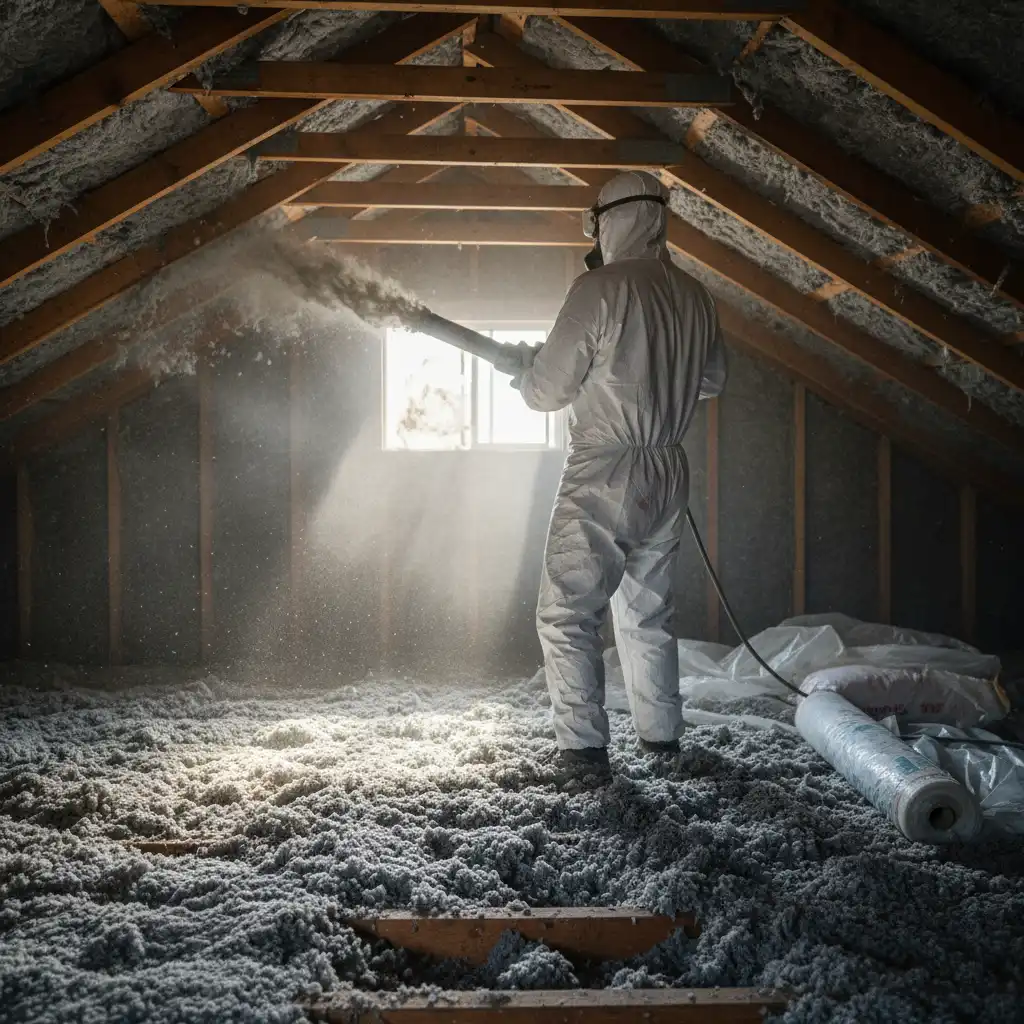
Our team in action — insulation professionals serving North Hollywood
Why Insulation Removal Is Needed in North Hollywood, CA
Extreme San Fernando Valley Heat
North Hollywood sits in the interior San Fernando Valley, one of the hottest microclimates in Southern California. According to NOAA climate data, the North Hollywood area averages 25 or more days per year above 95°F, with heat events frequently reaching 108°F to 113°F during peak summer months. During the record-breaking heat dome of September 2022, parts of the San Fernando Valley hit 116°F. These temperatures drive attic air to 140°F–160°F, baking insulation and causing fiberglass batts to compress by as much as 40% of their original thickness — directly reducing their rated R-value and making removal and replacement the only effective solution.
Rodent Activity in Older Neighborhoods
Neighborhoods like Lankershim Industrial District adjacent housing, the older bungalows along Camarillo Street, and the ranch-style homes near North Hollywood Park are particularly vulnerable to roof rat and Norway rat infestations. The Los Angeles County Department of Public Health has consistently identified the eastern San Fernando Valley as a high-activity zone for rodent pressure. Once rats nest in attic insulation, the contamination — including hantavirus-risk droppings and ammonia-heavy urine — makes the material unsafe to leave in place. Partial removal is insufficient; full extraction is required before rodent proofing and re-insulation.
Aging Housing Stock and Deferred Maintenance
The median age of homes in North Hollywood is approximately 60 years. Many properties in the Magnolia Park Historic District, NoHo Arts District, and along Radford Avenue contain original 1950s and 1960s insulation that has never been updated. At that age, even undisturbed fiberglass batts have degraded past their rated R-value thresholds. California Title 24 energy code requires attics to achieve a minimum of R-38 in Climate Zone 9 (which covers North Hollywood) — an R-value most original mid-century insulation can no longer meet.
Moisture and Roof Leaks After Winter Storms
While North Hollywood averages only about 14 inches of rain per year, the region experiences intense atmospheric river events — such as the January 2023 storms that dropped over 7 inches of rain in a 10-day period across Los Angeles County. These events frequently cause roof leaks in aging stucco homes, saturating attic insulation with moisture that promotes mold growth and permanently destroys the material’s thermal performance. Wet insulation must be removed promptly to prevent secondary structural damage and microbial contamination.
Pre-1980 Construction and Potential Hazardous Materials
Homes built before 1980 in areas like the residential blocks near Laurel Canyon Boulevard and the older apartment complexes along Lankershim Boulevard may contain vermiculite insulation with Zonolite-sourced asbestos content, or urea-formaldehyde foam insulation used briefly in the 1970s. Both materials require specialized removal protocols and, in some cases, licensed abatement contractors. Our team identifies these materials during the initial inspection and guides homeowners through the appropriate next steps.
Signs You Need Insulation Removal in North Hollywood
Energy and Comfort Indicators
- Utility bills 20–30% higher than comparable homes in the 91601 or 91606 zip codes
- Rooms on the top floor remaining 10°F or more warmer than the rest of the house during summer
- HVAC system running continuously during North Hollywood summer heat events without achieving set temperature
- Noticeable drafts or uneven temperatures throughout the home
Biological and Contamination Indicators
- Evidence of rodent activity: droppings, gnaw marks, or nesting materials visible in the attic
- Musty or ammonia-like odors coming from ceiling vents or attic access points
- Visible mold growth on insulation, joists, or roof sheathing
- Discolored or stained insulation following a roof leak or plumbing failure
Structural and Age-Based Indicators
- Home was built before 1980 and insulation has never been replaced
- Flattened, compressed, or settled insulation visible through the attic access hatch
- Presence of gray-brown granular material (potential vermiculite) in attic
- Recent pest remediation that did not include insulation removal
If you notice two or more of these signs, scheduling a professional inspection is the recommended next step. Delaying removal can compound damage and increase overall project costs significantly.
Insulation Removal Methods and Approaches
Mechanical Vacuum Extraction
The most common method used in North Hollywood attics, mechanical vacuum extraction uses industrial-strength negative-pressure machines to pull loose-fill cellulose, fiberglass, or mineral wool into sealed exterior collection bags. This method is ideal for blown-in insulation that has degraded or been contaminated. It is the fastest and cleanest approach for whole-attic removal in the typical 1,200–2,000 sq ft homes found throughout the NoHo Arts District and Magnolia Park.
Manual Batt Removal
Fiberglass or mineral wool batts installed between rafters or floor joists must be manually removed, bagged, and hauled out. This method is labor-intensive but necessary for the numerous mid-century ranch-style homes in North Hollywood that were originally insulated with paper-faced fiberglass batts. Manual removal is often combined with vacuum extraction when both batt and loose-fill materials are present.
Wet Spray Removal
Spray-applied insulation, including older wet-spray cellulose or certain spray foam products, requires mechanical scoring and scraping followed by vacuum extraction. This method is more time-intensive and is used selectively based on material type identified during the initial inspection.
Hazardous Material Abatement Coordination
When pre-removal testing identifies asbestos-containing materials or other regulated substances, removal must follow California Division of Occupational Safety and Health (Cal/OSHA) regulations and may require a licensed abatement contractor. NoHo Insulation Pros coordinates directly with certified abatement professionals to ensure compliance and continuity of service for North Hollywood homeowners.
Ready for Insulation Removal? Get Your Free Estimate Today.
NoHo Insulation Pros serves North Hollywood and the surrounding area — we’ll be on-site within 24 hours.
📞 Call 818-477-1218Insulation Removal Cost in North Hollywood, CA
Understanding the cost of insulation removal in North Hollywood helps homeowners plan appropriately. Pricing varies based on several project-specific factors, but the following ranges reflect typical jobs in the local market.
Typical Price Ranges
- Standard attic insulation removal (up to 1,000 sq ft): $500–$900
- Mid-size attic removal (1,000–1,800 sq ft): $900–$1,600
- Large attic or full-home removal (1,800–2,500 sq ft): $1,600–$2,500
- Crawl space insulation removal: $600–$1,400 depending on access and linear footage
- Rodent-contaminated attic removal with sanitization: Add $300–$600 to base removal cost
- Hazardous material abatement (asbestos or vermiculite): $1,500–$4,000+ depending on extent
Key Cost Factors
- Attic access difficulty: North Hollywood’s older homes often have low-pitch rooflines and tight attic clearances that increase labor time.
- Insulation depth: Homes with multiple layers of insulation added over decades require more extraction time.
- Contamination level: Rodent infestations, mold, or moisture damage increase disposal and sanitization costs.
- Material type: Loose-fill extraction is generally faster and less expensive than manual batt removal.
North Hollywood Pricing Notes
Labor costs in Los Angeles County are higher than the national average, which is reflected in local pricing. However, the long-term energy savings from removing degraded insulation and installing new R-38 material in a North Hollywood home can reduce cooling costs by 20–30% annually — a meaningful return given the valley’s extreme summer climate. Request a free estimate today to get an accurate quote for your specific property.
North Hollywood Neighborhoods We Serve
NoHo Arts District
The core Arts District along Lankershim Boulevard features a mix of 1940s bungalows and more recent infill construction. Older properties here frequently have original insulation that has never been updated, making removal and replacement a high-priority project for new homeowners.
Magnolia Park Historic District
Magnolia Park’s well-preserved 1930s–1950s Craftsman and Spanish Revival homes are among North Hollywood’s oldest residential buildings. These properties commonly contain degraded rock wool insulation or, in some cases, suspect pre-1980 materials that require testing before removal.
North Hollywood Park Neighborhood
The residential blocks surrounding North Hollywood Park feature predominantly 1960s ranch-style homes with fiberglass batt insulation that has compressed significantly after 50–60 years of San Fernando Valley heat cycling. This neighborhood has a high rate of rodent-related insulation calls.
Lankershim and Camarillo Corridor
This transitional area includes a mix of single-family homes and older apartment buildings. Multi-unit properties present unique removal challenges due to shared attic spaces and limited access points.
Valley Village (Adjacent)
Directly bordering North Hollywood, Valley Village’s 1950s and 1960s tract homes share the same insulation age profile and rodent pressure as the NoHo core. View all service areas we cover.
Maintenance Tips After Insulation Removal in North Hollywood
After new insulation is installed, these location-specific maintenance practices will help you protect your investment and extend the life of your insulation in the demanding San Fernando Valley climate.
- Inspect attic access annually: Check the attic hatch seal each fall before the rainy season. A poorly sealed hatch is one of the most common entry points for conditioned air loss.
- Check soffit and ridge vents each spring: North Hollywood’s June gloom brings moisture that can condense in poorly ventilated attics. Confirm vents are clear of debris and functioning.
- Monitor for signs of rodent re-entry: Check bait stations or exclusion work completed during rodent proofing service every 6 months.
- Inspect roof flashing after major rain events: After atmospheric river events like those of January 2023, check attic for moisture intrusion within 48 hours.
- Keep attic storage minimal: Boxes and stored items compress insulation and create rodent harborage. Keep the attic floor clear.
- Trim overhanging trees: Many North Hollywood properties have mature trees providing shade — but overhanging branches create rodent highway access to the roof. Trim branches to at least 6 feet from the roofline.
- Schedule a professional inspection every 5–7 years: Given North Hollywood’s heat and biological pressure, professional reassessment ensures insulation remains at code-compliant R-38 performance.
Why Choose NoHo Insulation Pros for Insulation Removal in North Hollywood
NoHo Insulation Pros is a locally focused insulation contractor with deep knowledge of North Hollywood’s specific housing stock, climate conditions, and local code requirements. We are not a national franchise — we are a team built around the San Fernando Valley, familiar with the mid-century ranch homes of North Hollywood Park, the Craftsman bungalows of Magnolia Park, and the dense multi-family buildings along Lankershim Boulevard.
Our technicians are trained in safe removal protocols for all insulation types found in pre-1980 North Hollywood construction. We use commercial-grade vacuum equipment that minimizes particulate spread into the living space — protecting your family during the removal process. Every job includes a thorough post-removal inspection and photo documentation so you know exactly what was found and what was done.
We offer transparent, itemized pricing with no hidden fees, and our team is responsive to the urgency of contaminated-insulation situations. When you need insulation removal in North Hollywood, you need a contractor who understands why it matters here. That is NoHo Insulation Pros.
Call us today at 818-477-1218 or request a free estimate online.
Frequently Asked Questions: Insulation Removal in North Hollywood, CA
How much does insulation removal cost in North Hollywood?
For a typical single-family home in North Hollywood with an attic of 1,000–1,800 sq ft, expect to pay between $900 and $1,600 for standard insulation removal. Rodent contamination, multiple insulation layers, or hazardous material presence will increase this estimate. We provide free on-site quotes for all North Hollywood properties.
How long does insulation removal take in North Hollywood?
Most standard attic insulation removal jobs in North Hollywood are completed in a single day — typically 4–7 hours depending on square footage, insulation type, and contamination level. We schedule early morning start times during summer months to manage attic temperatures safely.
Do I need to leave my home during insulation removal?
It is not always required, but we recommend it — especially if rodent contamination or mold is present. Our crew seals all attic access points and HVAC vents before beginning work, but vacating the home for the duration of removal provides the greatest safety margin, particularly for young children or those with respiratory sensitivities.
Is the old insulation in my North Hollywood home likely to contain asbestos?
If your home was built before 1980 and you have never had the insulation replaced, there is a possibility of hazardous materials — particularly if you see gray, granular material (vermiculite) in the attic. Popcorn ceilings containing asbestos were also common in 1970s San Fernando Valley construction. We recommend laboratory testing before any removal begins. We coordinate this testing as part of our inspection process.
Can I just add new insulation on top of the old insulation?
In some cases, yes — if the existing insulation is dry, clean, and undamaged, adding new material on top can be cost-effective. However, in North Hollywood, the high rate of rodent contamination, moisture events, and decades-old degraded material means that full removal is often the correct approach. Installing new insulation over contaminated material does not resolve the health hazard or odor issue.
What type of insulation do you recommend after removal in North Hollywood?
For most North Hollywood attics, we recommend blown-in fiberglass or blown-in cellulose insulation installed to a minimum R-38 per California Title 24 Climate Zone 9 requirements. Blown-in insulation provides excellent coverage around obstructions and achieves consistent depth across irregular attic floors. For properties with significant air sealing needs, spray foam insulation may be recommended for rim joists and penetrations before the blown-in layer.
Do you handle the disposal of old insulation?
Yes. We handle all bagging, hauling, and disposal of removed insulation materials as part of our standard service. Rodent-contaminated material is disposed of as biohazard waste per Los Angeles County regulations. You do not need to arrange any additional disposal services.
How do I know if my North Hollywood home needs insulation removal versus just adding more insulation?
The key indicators that full removal is necessary — rather than a top-up — include: visible rodent droppings or nesting, moisture damage or mold, insulation that is completely flat and compressed, unusual odors from attic vents, and any suspected hazardous material content. If your home’s insulation is simply aging but otherwise dry and uncontaminated, a professional assessment will determine whether addition alone is appropriate. Call 818-477-1218 to schedule your free inspection.
Get a Free Insulation Removal Estimate in North Hollywood Today
If your North Hollywood home has aging, contaminated, or damaged insulation, every month of delay means higher energy bills, continued exposure to air quality hazards, and potential structural deterioration. NoHo Insulation Pros is ready to assess your attic, explain your options in plain language, and provide a transparent written estimate at no charge.
We serve all North Hollywood neighborhoods — from Magnolia Park and the NoHo Arts District to North Hollywood Park and the Lankershim Corridor — with same-week inspection availability in most cases.
Call us now at 818-477-1218 to speak directly with a North Hollywood insulation specialist, or submit your information online and we will follow up within one business day. Your home’s comfort, safety, and energy performance start with what’s inside your walls and above your ceiling.